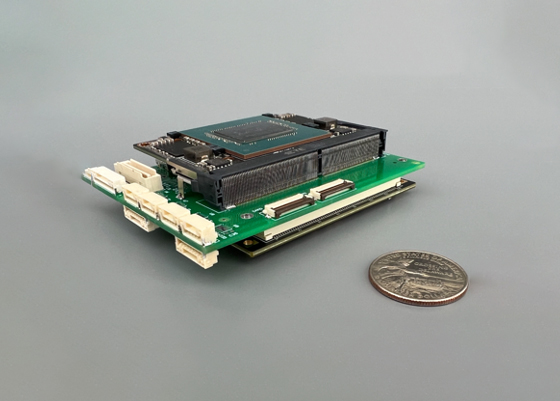
Palladyne AI’s BRAIN edge AI flight computer has been selected as a finalist in a US Army competition focused on low-cost interceptors and fire-control technologies.
BRAIN is designed to handle guidance, navigation, and flight-control functions aboard airborne platforms, while enabling autonomous decision-making and real-time mission adjustments.
Its edge computing architecture allows these functions to run onboard without relying on centralized processing or continuous connectivity, potentially helping platforms maintain their capabilities in contested environments.
The company said BRAIN has already generated $2.6 million in orders from a defense prime, including $2.3 million for a low-cost kinetic interceptor for counter-unmanned aircraft systems.
As a finalist, Palladyne will demonstrate BRAIN to army and Department of Defense evaluators, who will assess its potential to support AI-enabled flight control and autonomy in next-generation interceptor systems.
“Low-cost interceptor modernization is one of the clearest examples of where edge intelligence, flight control and autonomy must come together,” said Palladyne chief executive Ben Wolff.
“Being selected as a finalist gives Palladyne AI the opportunity to demonstrate BRAIN directly to Army and DoW evaluators in a mission-relevant setting.”