Military artificial intelligence could soon move beyond command centers and onto soldiers’ wrists, with a new wearable designed to deliver AI-processed battlefield intelligence directly to frontline operations.
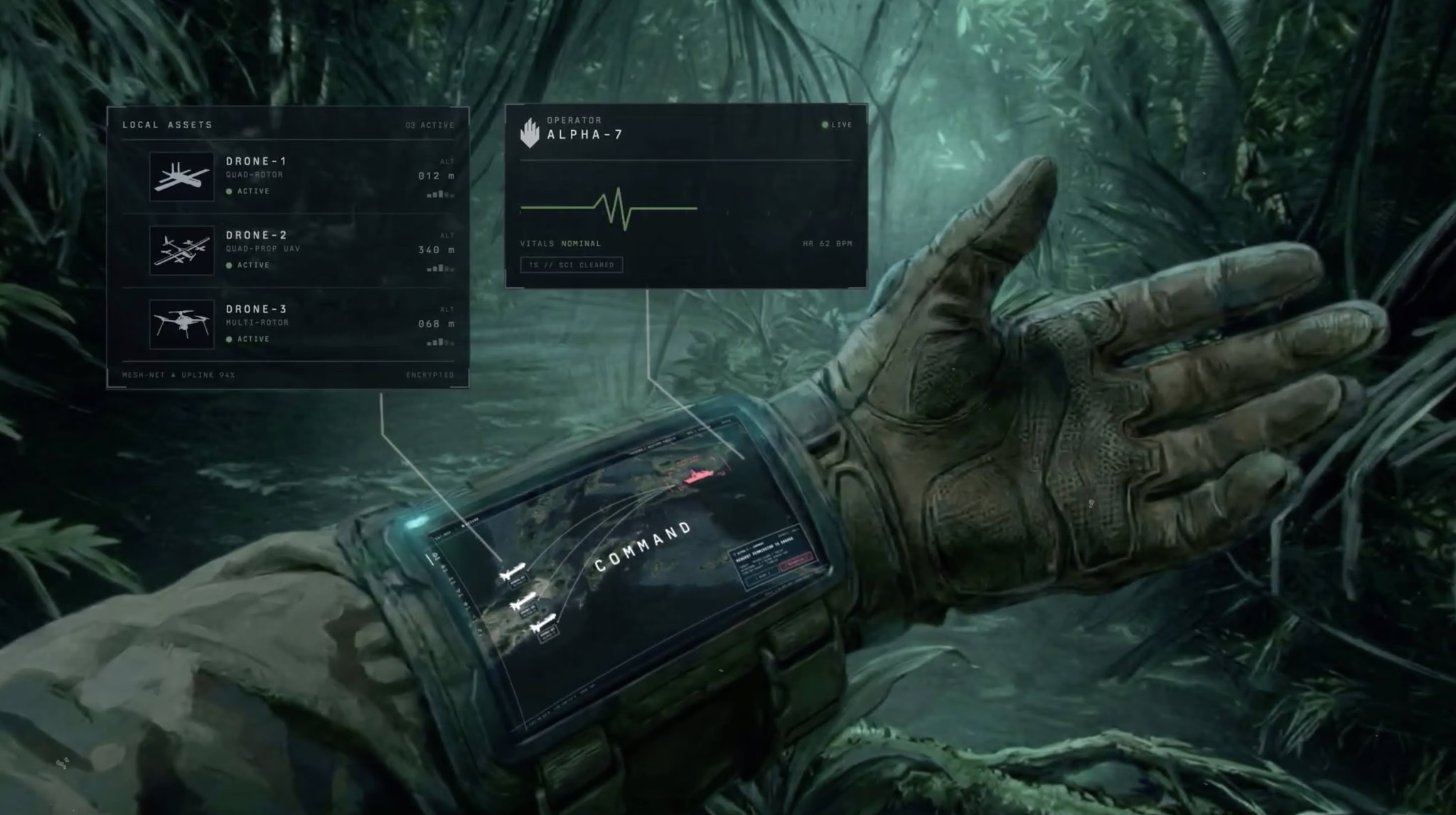
Texas defense startup Smack Technologies has raised $61 million in Series B funding to develop Alpha, a wrist-worn device connected to the company’s Omega AI software.
Omega fuses and analyzes multimodal sensor data, then uses Smack’s proprietary AI models grounded in the physics of war to accelerate decision-making across echelons and time horizons. Alpha brings that same reasoning capability to the tactical edge, giving operators a real-time view of the battlefield and potential courses of action.
Alpha uses a flexible, forearm-mounted display designed to keep that intelligence accessible without distracting soldiers from their surroundings.
Smack chief executive Andy Markoff compared the device to the play sleeve worn by quarterbacks.
It is intended for hot, humid, and heavily vegetated environments where helmet-mounted displays could obstruct a soldier’s view or prove difficult to use.
Bringing AI to the Edge
The larger challenge is making this AI capability work where connectivity is limited or unavailable.
Markoff said Alpha must operate alongside field hardware with “little to no connectivity,” rather than merely display information processed elsewhere and transmitted over a network.
The company also described Alpha as the tactical counterpart to Omega, its command-level AI platform.
Together, they form what Smack calls “Intelligent Autonomy,” an approach designed to help distributed forces pursue shared mission objectives in contested and degraded environments.
In addition, the system is not intended to make battlefield decisions independently.
Instead, Smack said Alpha will give operators the context needed to make those decisions themselves, including mission objectives, operational constraints, and the activities of nearby units.
This could allow frontline operators to act with greater independence while remaining aligned with the broader mission, particularly when communications with higher command are disrupted.