
A new challenge is emerging as autonomous systems spread across the battlefield: coordinating disparate platforms toward a single mission without constant human direction.
Austin-based NODA AI is moving fast to solve it.
Less than a month after winning a $10-million Department of Defense contract to build MAESTRO — orchestration software tied to the Pentagon’s LUCAS attack drone program — the company has landed a follow-on contract worth 10 times as much: $100 million to scale its autonomous mission command software across the entire Joint Force.
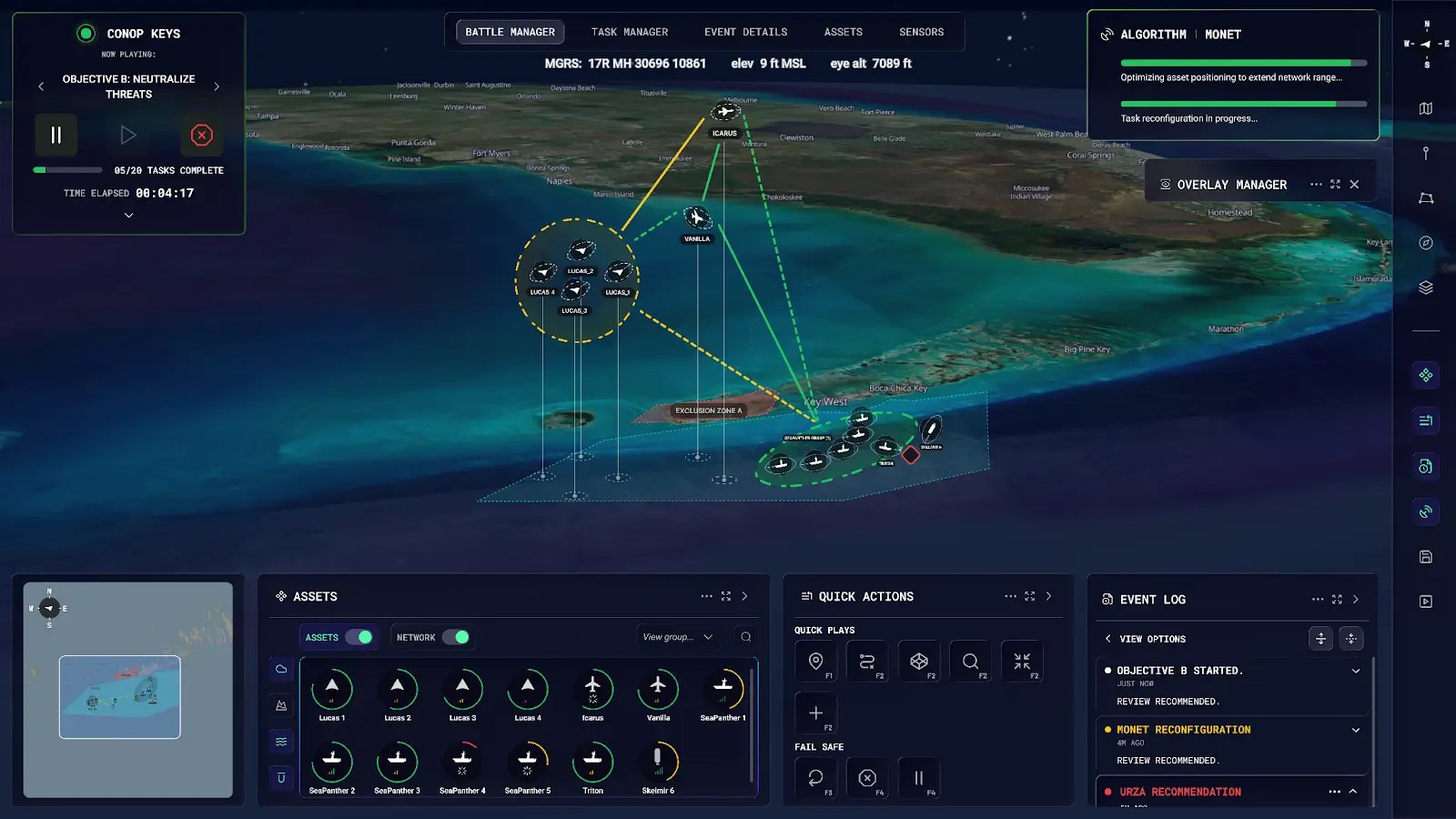
NODA’s URZA platform acts as an orchestration layer, assessing available assets and their capabilities to determine mission contribution.
Paired with its Software-Defined Effects engine, it fuses those capabilities to deliver desired effects across multiple domains.
Turning Commander Intent Into Action
URZA can operate across different vendors and domains, giving commanders greater flexibility in selecting assets for a mission.
NODA said its software can also maintain mission execution when networks are degraded or denied, keeping autonomous forces aligned with the commander’s intent in contested environments.
The technology is integrated with LUCAS (Low-Cost Uncrewed Combat Attack System), the Pentagon’s attritable unmanned strike system, adding the platform to NODA’s network of government and industry integrations.
“We focus on providing adaptation and optionality to the commander,” said Philong Duong, chief executive of NODA.
“The ability to task drones is table stakes. We’ve developed a software-defined effects engine that understands capabilities and limitations, and outputs desired effects.”
Scaling Autonomous Mission Command
The $100-million award will expand NODA’s software across the Joint Force, supporting autonomous systems from different vendors without requiring changes to their underlying hardware or software.
The company said the approach is intended to provide a common software layer for coordinating increasingly diverse autonomous forces across multiple domains.