
The European Commission said an October cyberattack that forced it to take several applications offline was carried out with a publicly available AI tool.
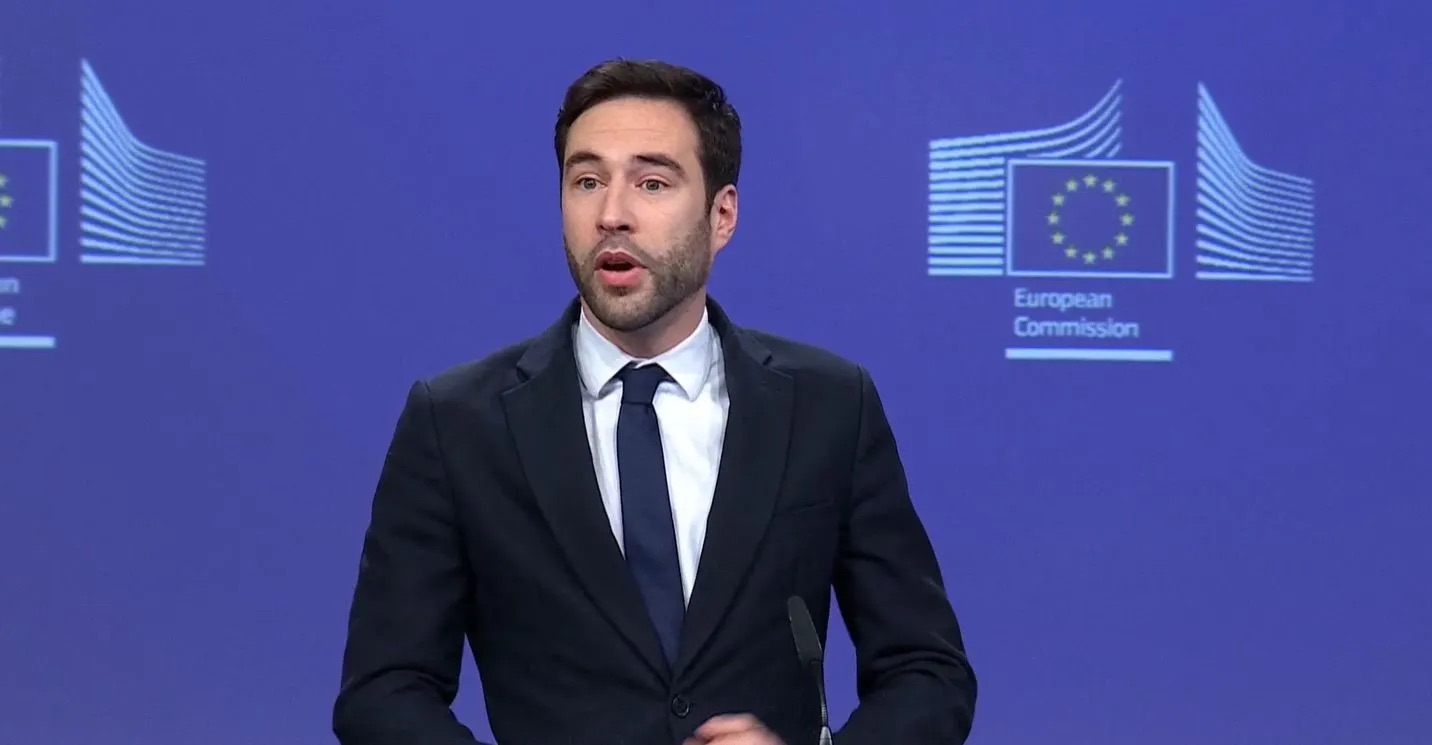
Commission spokesperson Thomas Regnier told reporters at the midday press briefing in Brussels on November 19 that “we can confirm that this was an AI generated cyber campaign.” He said the incident was detected on October 22 and confirmed on October 26 after an initial investigation.
The Commission temporarily took down several applications, and most have since been restored, Regnier said. He said investigators had found no evidence of a data breach affecting Commission staff as a whole and that he was not aware of any ransom demand.
He declined to attribute the attack, saying the investigation is ongoing.
The confirmation follows warnings this month from the FBI and from CERT-EU, the cybersecurity service for EU institutions, that open-source AI hacking frameworks are being used in live intrusions.
Regnier did not name the tool. He said the Commission is in close contact with CERT-EU and the European Data Protection Supervisor.
On November 5, CERT-EU published a warning about ARTEX, which it described as an open-source, large language model driven autonomous penetration testing platform.
CERT-EU said it had observed similar AI-driven activity against the EU bodies it serves and assessed that it highly likely involved ARTEX. The original author made the ARTEX repository unavailable in October 2026 after reports of misuse, and the versions still available are independent forks, CERT-EU said.
The FBI said in a November 13 alert that actors have used ARTEX since at least August 2026 against 10 sectors, including defense and government, and that some intrusions reached privileged access in under three hours.
Asked why the Commission had not disclosed the incident earlier, Regnier said defensive measures must stay out of public view to be effective. He said “there was no hiding whatsoever.”
Military and government defenders are already training with AI tools of their own.
NATO’s cyber defense center added AI agents to its Crossed Swords exercise for the first time this month, and the US Air Force’s cyber component has been preparing for autonomous AI cyberattacks, saying frontier AI can now automate exploit development in minutes.
CERT-EU has recommended that organizations reduce the internet exposure of their systems, isolate management panels, prioritize emergency patching of internet-facing assets and hunt for ARTEX-like automated scanning.
The Commission’s investigation remains open.