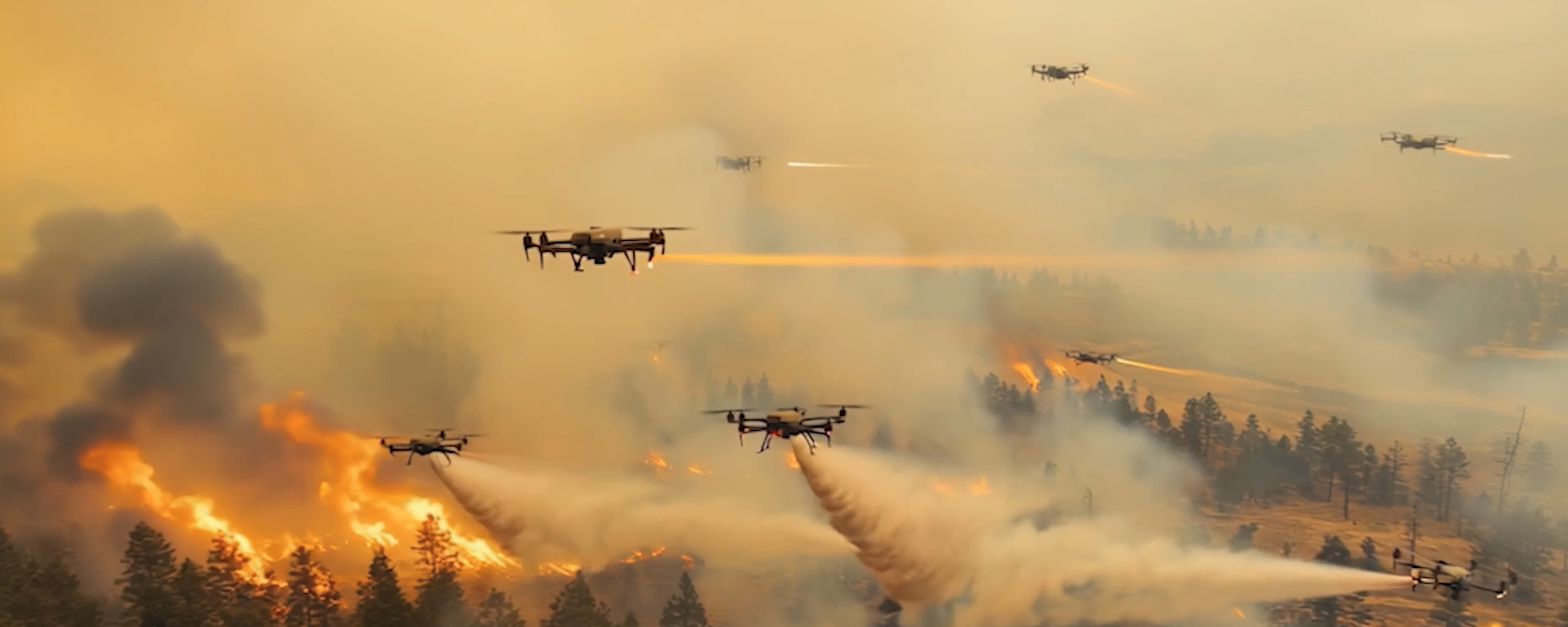
Palladyne AI demonstrated an artificial intelligence-powered drone swarm during the US Army’s Ivy Mass exercise, showing how a single operator can oversee multiple autonomous aircraft while connected to the service’s Next-Generation Command and Control (NGC2) network.
The drill paired the company’s SwarmOS autonomy software with a mixed fleet of intelligence, surveillance, and reconnaissance drones and the Gremlin-X reusable mini-bomber, enabling them to coordinate and execute tasks autonomously in communications-contested environments without cloud connectivity.
The connection to NGC2 allowed live target tracks to be shared across the command network while AI handled much of the coordination.

According to Palladyne AI, its software ran on size-, weight-, and power-constrained computing hardware, which enabled AI-driven decision-making and real-time adaptation at the edge.
The Autonomy Advantage
Denis Garagić, chief technology officer and co-founder of Palladyne AI, said the recent demonstration cleared a “fundamental technical threshold” for battlefield autonomy.
SwarmOS reportedly turned a collection of drones into a coordinated, multi-sensor team, giving operators a broader view of the battlefield without increasing complexity.
The software also reduced operator burden by allowing one soldier with minimal training to command multiple drones through a single interface.
For Palladyne Aerospace and Defense President Doug Dynes, the exercise proved how AI-enabled autonomy can help create a “faster, more lethal kill chain” for the mission sets the Pentagon is prioritizing today.
“Ivy Mass put our autonomy stack in the hands of the soldiers who could use it on the battlefield,” he stressed.