Chinese universities and research institutions linked to the country’s defense sector are seeking access to NVIDIA’s advanced AI processors, according to procurement records reviewed by The Japan Times.
Access to advanced AI chips has become a major focus of US export controls targeting China, as the processors are used to train and operate artificial intelligence models.
According to the report, at least seven Chinese universities supporting the country’s armed forces have sought access to NVIDIA’s H200 processors, while more than 25 military-linked institutions have used or attempted to obtain the company’s AI chips.
The report also found that several institutions were pursuing remote access rather than direct purchase of the processors, allowing them to use advanced AI hardware hosted outside China without the chips physically entering the country.
Names Named
Among the institutions identified were Beihang University and Northwestern Polytechnical University, both linked to China’s defense sector and included on the US Commerce Department’s Entity List.
Records reviewed by the publication indicate that Beihang University’s School of Cyber Science and Technology is seeking leased access to NVIDIA H200 processors, while Northwestern Polytechnical University’s School of Cyberspace Security is pursuing similar arrangements.
The H200 was NVIDIA’s most powerful AI processor before the launch of its Blackwell generation, built for high-intensity AI workloads.
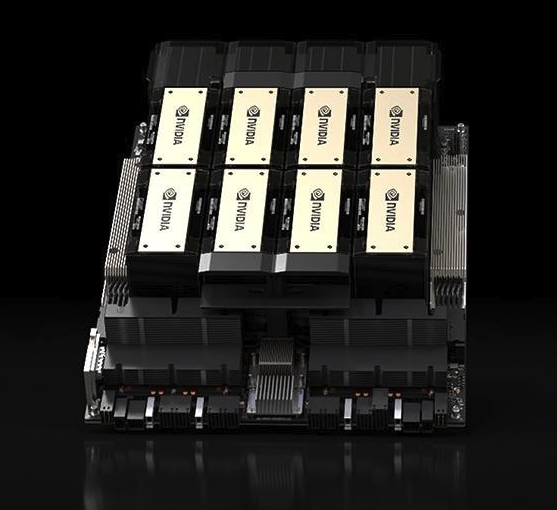
Although the universities appear to be seeking relatively small amounts of computing power, analysts noted that even a single server equipped with advanced NVIDIA chips could support research tied to autonomous systems, cyber operations, and intelligence analysis.
“That’s research lab-scale, and much smaller than what hyperscalers buy and use for training the most advanced frontier AI models,” Bloomberg Economics analyst Michael Deng told the outlet.
“But a server like that is enough to take one of China’s leading open-weight AI models and adapt it for military applications like autonomous weapons development or cyber operations.”
NVIDIA Pushback
NVIDIA has disputed suggestions that its products could become a critical dependency for China’s military, arguing that the country already possesses sufficient domestic computing resources for defense applications.
However, Ryan Fedasiuk, a fellow at the American Enterprise Institute and former US State Department official, questioned whether China’s People’s Liberation Army (PLA) has viable alternatives to NVIDIA’s processors.
“The question is not whether the PLA wants to depend on Nvidia, but whether it realistically has any choice in the matter,” he said. “For now, the answer is no.”