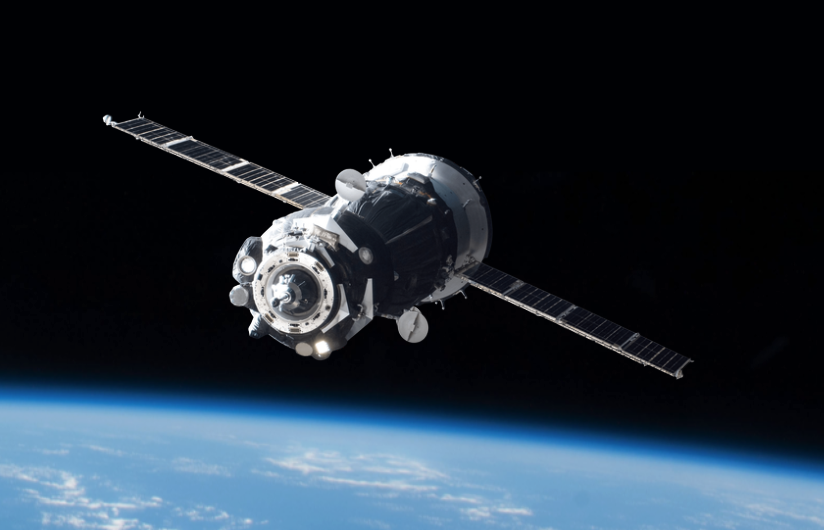
NASA has selected California firm PiLogic to test its Exact AI technology, designed to help spacecraft detect and diagnose failures across critical onboard systems.
PiLogic builds explainable, probabilistic AI for complex space systems. Unlike rule-based systems that simply flag abnormal telemetry readings, PiLogic’s Exact AI produces diagnoses, assigns a probability to each, and can flag failures nobody predicted.
Its models are designed for specific applications and can run on standard CPU hardware, reducing the computing resources needed for onboard diagnostics.
The six-month NASA Small Business Innovation Research Phase I award will fund development of PiLogic’s Manifest diagnostic system across three spacecraft subsystems: electrical power, thermal management, and attitude control.
The system is designed to identify faults that may not be captured by existing rule-based monitoring, including failures that spread from one subsystem into another.
“This selection lets us apply Exact AI to the missions where the margin for error is thinnest,” said PiLogic chief executive and co-founder Johannes Waldstein.
“Deep space and Earth-independent operations don’t give you the luxury of a ground team troubleshooting in real time. Our technology gives engineers a system that reasons through failures the way a human expert would, with a clear account of its own confidence, which is exactly what NASA needs as missions get more autonomous and what the commercial satellite industry needs as constellations get too large to monitor by hand.”
NASA has previously explored onboard AI for fault diagnosis, while PiLogic is separately working with the US Air Force Research Laboratory to use its technology for satellite health monitoring.
PiLogic frames the NASA award as building on that momentum, positioning a NASA-validated diagnostic system as a stronger case for adoption across both government and commercial satellite markets.