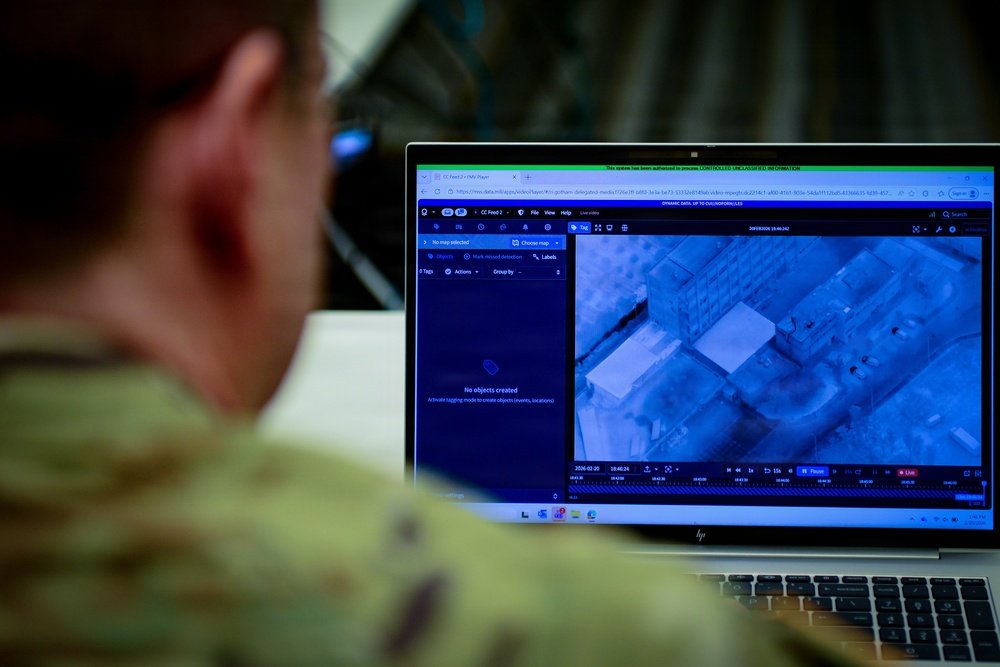

Poland signed a five-year deal for Palantir’s Maven Smart System, bringing AI that fuses battlefield data for commanders to its entire military, the Defense Ministry’s Polska Zbrojna magazine reported.
Defense Minister Władysław Kosiniak-Kamysz put the contract’s value at about $300 million, TVN24 reported.
Maven, which will run in Poland under the name Saturn, combines data from drones, satellites, radars, and reconnaissance systems into a common picture of the battlefield.
The system will help build a picture of the situation and present commanders with courses of action faster, the ministry said, adding that NATO uses the same technology.
Kosiniak-Kamysz said all commands and all branches of the armed forces would use the software.
The contract was signed by Zbigniew Podosek, director of the Armed Forces Cyberspace Resources Center, and the head of Palantir’s Polish subsidiary.
Kosiniak-Kamysz, Chief of the General Staff Gen. Wiesław Kukuła, and Palantir CEO Alexander Karp attended the ceremony.
Data Stays Under Polish Control
Kosiniak-Kamysz said all keys, servers, and information would remain in the exclusive possession of the Polish military and that Palantir would have no access to the data.
He said the contract was vetted by the special services, including the Military Counterintelligence Service, and discussed by the government’s security committee.
The deal drew a protest in Warsaw earlier this month over data security.
Kosiniak-Kamysz compared the deal’s importance to Poland’s purchases of F-35 fighters and Apache helicopters, and said Ukraine could not have survived without Maven.
Kukuła said a new air situation system called Atlas, which will replace the Dunaj system, will draw on data from the Palantir tool, Defence24 reported.
Polish Alternatives in Development
The contract follows a December 2024 cybersecurity cooperation agreement and an October 2025 letter of intent between the ministry and Palantir.
Poland is moving the other way from some allies, including France, which has developed its own AI rival to Maven.
The ministry said it is also developing its own AI tools, Airon and Nefryt, which could replace the supplier’s tools in the future.