Northrop Grumman has integrated an artificial intelligence feature into its Forward Area Air Defense (FAAD) system, enhancing counter-drone operations for the US and its allies.
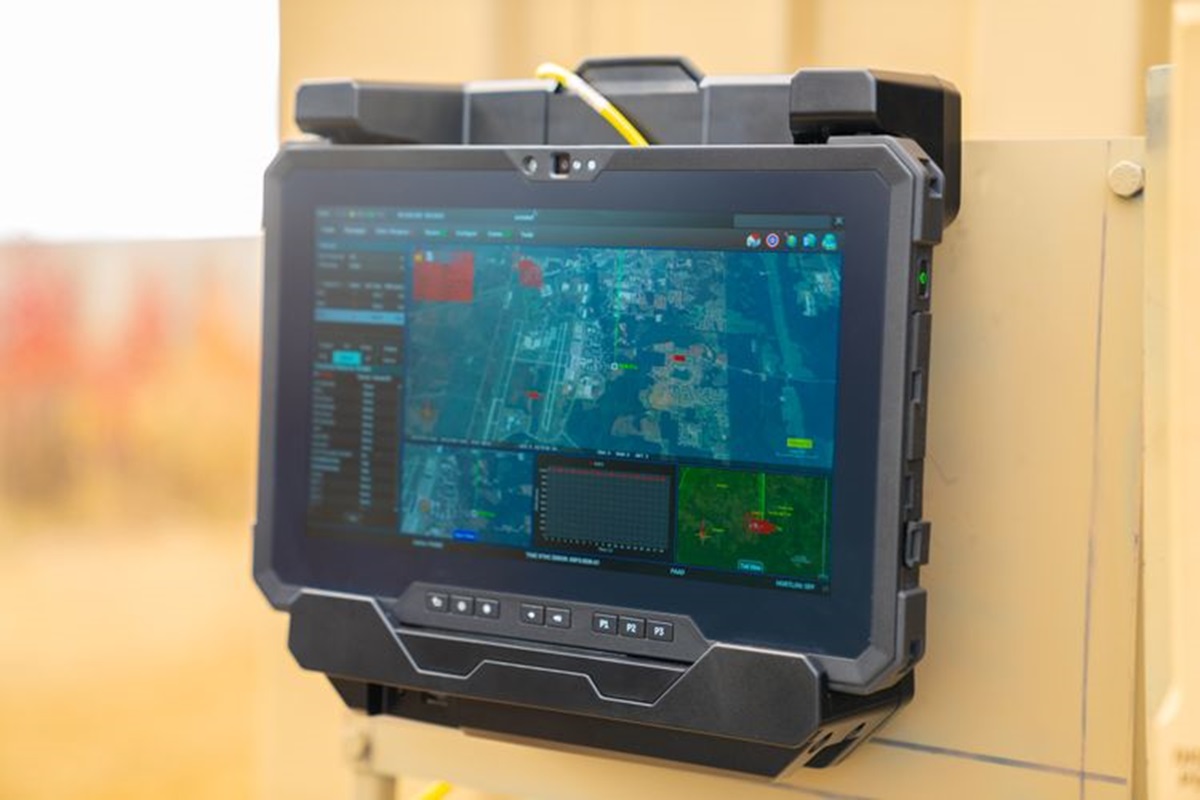
Leveraging years of live fire data, successful tests conducted this year at the US Army’s Yuma Proving Ground in Arizona demonstrated the new AI-driven Advanced Battle Manager’s (ABM) capability to counter complex drone swarms with a single click on a mobile tablet.
This upgrade also enhances the maneuverability among US forces, allies, and coalition partners.
Enhanced Threat Response
With the new AI feature, the FAAD command and control software can receive and process information from multiple sensors and generate engagement plans in under a quarter of a second.
Then, it analyzes threats and recommends optimal real-time weapon-target pairings.
As this AI-driven ABM continuously monitors the battlespace and adjusts plans as necessary, it helps warfighters manage multiple targets effectively during high-stress situations.
“This critical AI enhancement will create a streamlined and intuitive engagement plan giving service members more time to save lives with a single click,” Northrop Grumman VP and General Manager of Global Battle Management and Readiness Kenn Todorov said.
“Northrop Grumman and the US Army’s collaboration in innovation ensures the combat-proven FAAD system remains at the forefront of C-UAS technology,” he added.