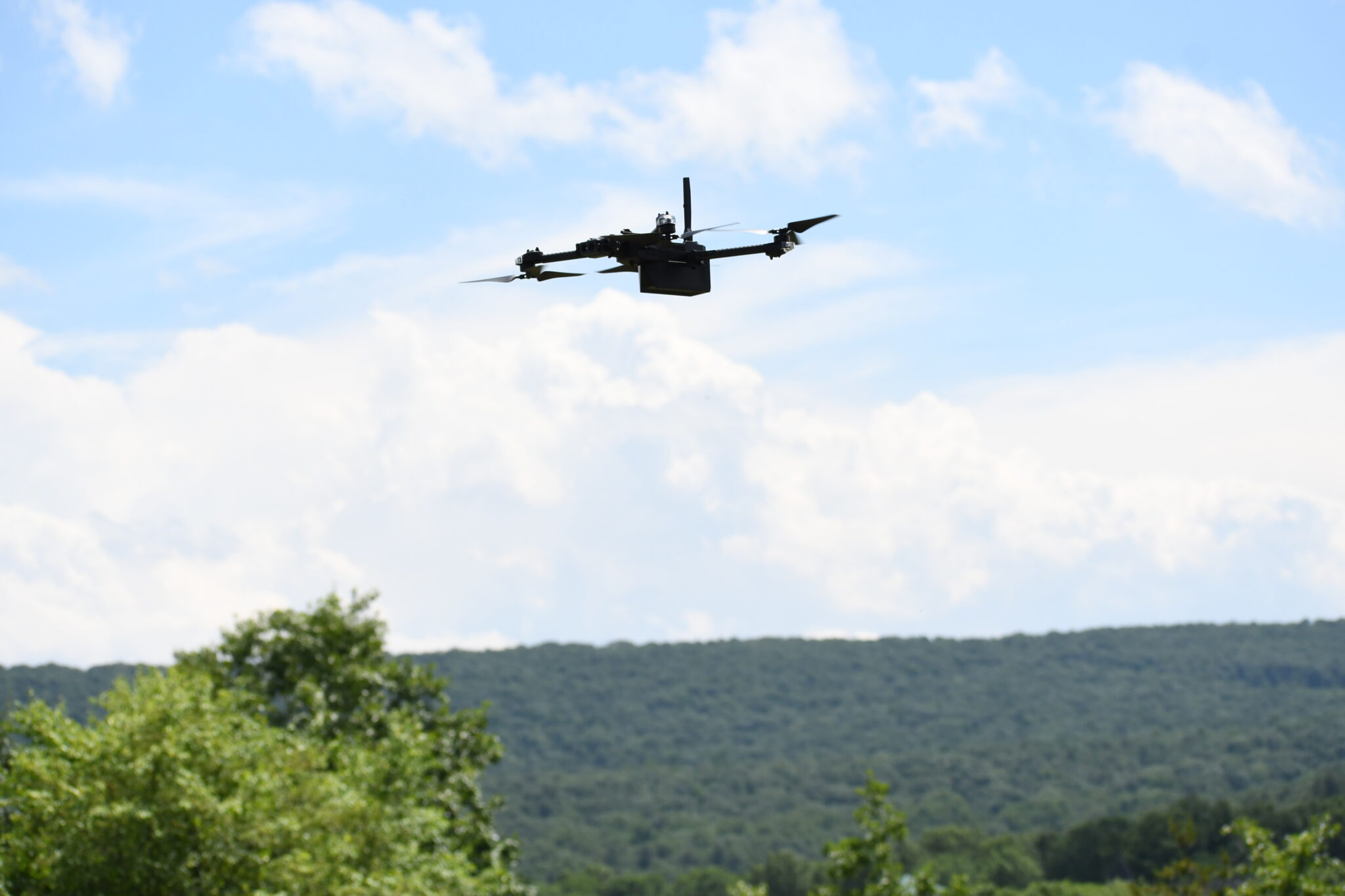
(Representative image only.) A US drone performing short range reconnaissance. Photo: Spc. Aliyah Vivier/DVIDS

Lockheed Martin’s Skunk Works and Spanish firm Arquimea have just dropped a major upgrade in tactical ISR — an AI-driven anomaly detection system designed to elevate visual intel to a whole new level.

Built to enhance electro-optical/infrared sensors, the tech lets ISR platforms spot subtle changes in a threat’s physical features and flag any anomalies that might slip past the human eye.

The cool part? The system doesn’t just scan more, it scans smarter.

You May Also Like

Texas AI Startup to Fast-Track Pentagon’s Digital Overhaul

The project will integrated solutions in support of the Pentagon’s cybersecurity, machine algorithm modeling, applied data science, autonomous systems, and DevSecOps.

EOS to Launch AI Command-and-Control Hub in France

The Australian defense company is establishing a major European center in France to advance sovereign counter-drone, AI, and command-and-control capabilities.

Turning Data Into Battlefield Insight: CGI and Vantor Team Up on AI Spatial Intelligence

The effort will merge CGI’s AI-driven analytics, edge computing, and visual processing with Vantor’s spatial intelligence, geo-positioning, and GNSS-resilient navigation tech, including its Tensorglobe platform and Raptor system.

US Army Hires New York’s Andro to Teach AI How to Fight in Dirty Airwaves

The work centers on RF-Gen, a new system that generates synthetic radio frequency data so AI models can train for real-world chaos, such as noisy, jammed, or fully contested airwaves, without dragging expensive field gear into the mix.