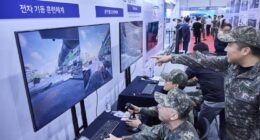
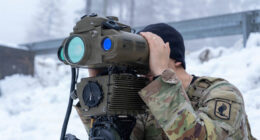
The US Army is looking to use artificial intelligence to make battlefield training more measurable, capturing real-time data on how soldiers employ their weapons during live exercises.
Under a $4.7 million, 12-month agreement, Armaments Research Company (ARC) will connect its AI-enabled weapon sensors to the army’s live collective training environment and tactical network.
The effort, carried out with the service’s Capability Program Executive Simulation, Training, Test and Threat, aims to support data collection by giving commanders and trainers a shared view of exercises and more detailed after-action reviews during large-scale training.

According to ARC, the sensors bring AI capabilities directly to individual weapons and collect data on how soldiers use them.
The company likens the training application to reviewing “game film,” with metrics that could help trainers assess tactical performance and spot areas for improvement.
“Today, tactical units have strikingly little objective data on how they fight,” ARC Chief Executive Mike Canty said. “We can’t accelerate readiness if we can’t measure it, and this effort begins to close that gap.”
Beyond training, ARC said the tech could support situational awareness, command and control, logistics planning, and maintenance.
The army’s longer-term aim is for soldiers to train with the same sensors they would use in combat, helping lessons from exercises carry over to operations.