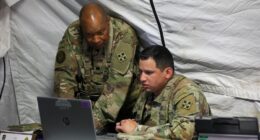
The US Marine Corps is making artificial intelligence a core part of basic training requirements, with all active-duty and reserve personnel now required to complete a new foundational AI course.
The mandatory training directive gives service members until the end of 2026 to complete the “Basic AI Course,” a 45-minute module covering core AI concepts, practical applications, and decision-support use cases.
It includes exposure to generative AI systems and large language models, including the Pentagon-backed GenAI.mil platform.
Officials said the program is intended to build operational awareness rather than provide advanced technical instruction.
“The course [is for] preparing Marines to operate, adapt, and lead in an increasingly AI-enabled Marine Corps,” the directive stated.
Building AI Readiness Across the Force
Marine officials described artificial intelligence as one of the most significant emerging technologies facing the service, warning that adversaries could gain an advantage if personnel are not adequately prepared.
More advanced intermediate and senior-level courses are already in development, with rollout expected in fiscal year 2027.
The expanded training pipeline reflects the corps’ broader AI modernization effort outlined in its 2025 implementation plan, which prioritizes workforce readiness, digital transformation, and large-scale AI adoption.
It also aligns with the Pentagon’s wider “AI-first” strategy to integrate AI tools into operational planning, intelligence analysis, and administrative workflows.